Why Amazon Online Shopping Matters for South African Sellers
When I look at the development of e-commerce in South Africa, one question stands out: what makes a customer choose one product over another when several sellers offer similar items?
For sellers, getting listed on a marketplace is only the first step. The real challenge is understanding what customers want, setting competitive prices, building trust and delivering a shopping experience that encourages repeat purchases.
Amazon.co.za has added another important competitor to South Africa's online retail market. However, sellers should not assume that simply listing products on Amazon will automatically generate sales. Customer decisions are influenced by several factors, including product relevance, reviews, delivery costs, availability and the overall value offered.
According to the Online Retail in South Africa 2026 report, South African online retail sales are expected to reach approximately R159 billion in 2026. The report also highlights the importance of trust, delivery economics and customer experience in the next phase of e-commerce growth.
For marketplace sellers, this creates an opportunity to make better decisions based on customer behaviour rather than assumptions.
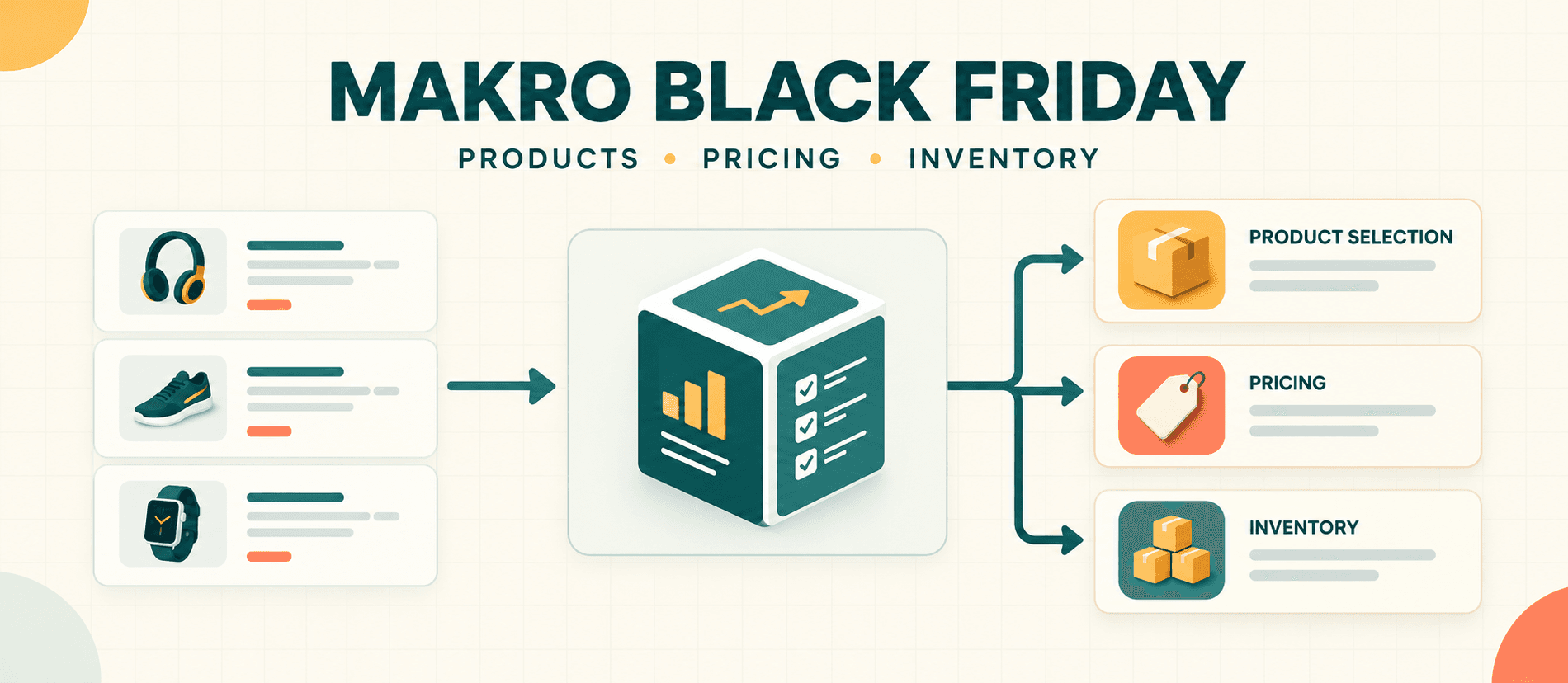
In this guide, I will explain what sellers can learn from Amazon online shopping trends in South Africa and how these insights can inform product selection, pricing and day-to-day operations.
Amazon Online Shopping: Understand What Customers Actually Want
One of the most important lessons I have learned from e-commerce is that product demand should be investigated before inventory is purchased.
A product may look attractive to a seller because it is popular on social media or performs well in another market. However, that does not necessarily mean South African customers will buy it at a profitable price.
Use Product Demand to Guide Product Selection
When researching Amazon online shopping trends, I recommend examining several indicators rather than relying on a single sales estimate.
Search demand: What problems are customers trying to solve? Product searches and keyword patterns can help identify customer needs and potential demand.
Sales performance: Where available, estimated sales, historical performance and category trends can help sellers evaluate whether a product may have consistent demand. Estimates should be treated as directional indicators, not guaranteed sales figures.
Customer reviews: Reviews often reveal what customers appreciate, what disappoints them and which product improvements could create a competitive advantage.
Competition: The number of competing listings, their prices, review profiles and product positioning can help determine whether entering a category is realistic.
For example, imagine I am considering selling a kitchen storage product. Several competing listings have strong review profiles, but customers repeatedly complain about weak materials and insufficient capacity.
Rather than immediately competing on price, I would investigate whether a more durable product with clearer dimensions and better product images could address those concerns.
This approach turns customer feedback into a practical product research tool.
Look Beyond Popular Products
High demand does not automatically translate into high profits. A popular product may also attract intense competition, expensive advertising or high fulfilment costs.
Before committing to inventory, I would calculate the expected margin using the purchase cost, marketplace fees, fulfilment and delivery expenses, packaging, advertising and a reasonable allowance for returns.
The key is to identify products that combine credible demand with manageable competition and sustainable margins.
Amazon Online Shopping: Set Competitive Prices Without Sacrificing Profit
Price is an important part of the online shopping experience, but the lowest-priced listing is not necessarily the best choice for every customer.
A shopper may prefer a slightly more expensive product if it offers better quality, stronger reviews, clearer specifications or a more convenient delivery option.
For sellers, the challenge is finding a price that remains attractive while covering the actual cost of doing business.
Understand the Full Cost of Selling
When evaluating Amazon online shopping opportunities, I would avoid setting prices based solely on competitors' listings.
Instead, I would calculate the minimum viable selling price.
A simplified calculation is:
Selling price − total variable costs = contribution before fixed overheads and tax.
Variable costs may include product acquisition, marketplace fees, fulfilment, shipping subsidies, packaging, advertising and expected return-related expenses.
The exact costs depend on the product, fulfilment arrangement and applicable marketplace fees, so sellers should verify the current terms before making pricing decisions.
Consider a hypothetical product selling for R500. If its combined variable costs are R350, the contribution is R150 before fixed overheads and tax.
If a competitor lowers their price to R450, matching that price would reduce the contribution to R100, assuming costs remain unchanged. That is a one-third reduction in contribution from a 10% reduction in selling price.
This illustrates why sellers should understand their profit thresholds before responding to competitor price changes.
Monitor Competition and Adjust Prices Carefully
Competitor prices can change frequently, especially during promotional periods. However, reacting to every price movement can create unnecessary price wars.
I recommend establishing clear pricing rules:
- Set a minimum price based on actual costs and the required margin.
- Monitor relevant competing products rather than every listing in the category.
- Evaluate whether a promotion generates enough additional sales to justify the reduced margin.
- Review stock availability and fulfilment costs before changing prices.
Tools such as Revenuealot can support sellers with pricing and operational decision-making through its e-commerce analytics and automated pricing capabilities. Sellers can use a defined pricing strategy to guide adjustments while protecting their profit floor, rather than relying entirely on manual competitor monitoring.
Automated pricing still requires sensible rules and regular review. It should support commercial decisions, not replace them.
Amazon Online Shopping: Improve Customer Trust and Manage Multiple Marketplaces
A competitive product and an attractive price are not enough if customers do not trust the listing or cannot obtain the product when they need it.
In South Africa, delivery costs and reliability are particularly important considerations. Research published by DHL in its 2025 e-commerce report found that 63% of surveyed South African shoppers were frustrated by high delivery costs, while 61% said faster delivery would improve their online shopping experience.
These findings provide useful context for sellers competing in Amazon online shopping and other marketplaces.
Build Trust Through Better Product Listings
Customers cannot physically inspect most products before purchasing them online. Product pages therefore need to answer their questions clearly.
I would focus on four areas:
- Product images: Use clear images that accurately represent the product, including relevant details, dimensions and practical use cases.
- Product descriptions: Explain the product's features, specifications, compatibility and limitations. Avoid vague claims that could create unrealistic expectations.
- Customer reviews: Monitor recurring complaints and use legitimate customer feedback to identify opportunities for product improvement. Never fabricate reviews or manipulate ratings.
- Delivery and availability: Keep stock information accurate and understand the fulfilment options available for each product.
These improvements can reduce uncertainty and help customers make informed purchasing decisions.
Use Data to Manage More Than One Marketplace
As a business expands beyond Amazon, maintaining consistent pricing, inventory information and product performance oversight becomes more complicated.
A seller operating on Amazon.co.za and Takealot, for example, may need to evaluate the same product under different competitive conditions. Demand, fees, fulfilment costs and pricing opportunities can vary between platforms.
This is where a structured data workflow becomes valuable.
Revenuealot is a South African e-commerce analytics and operations SaaS platform designed to help sellers make more informed decisions. Its capabilities include product selection analysis, automated pricing and multi-platform management.
Rather than treating each marketplace as an isolated business, sellers can use an appropriate multi-platform workflow to organise operations and evaluate performance across their sales channels.
Before expanding a product to another marketplace, I would compare its expected margin, customer demand, operational requirements and inventory availability. This helps determine whether expansion offers a genuine opportunity or simply adds complexity.
Ultimately, Amazon online shopping trends are most useful when they lead to specific business decisions. Data can help identify opportunities, but sellers still need to validate assumptions, monitor actual results and adjust their strategy as market conditions change.
Frequently Asked Questions
1. Is Amazon online shopping popular in South Africa?
Amazon.co.za is an established participant in South African e-commerce. Its customer reach and the wider online retail market create opportunities for sellers, although competition and demand vary by category.
2. What do customers consider when shopping on Amazon?
Customers may compare product relevance, price, reviews, delivery options, availability and return policies. The importance of each factor varies according to the product and the individual shopper.
3. How can sellers identify products with potential on Amazon?
Sellers can examine keyword demand, category trends, estimated sales, competing listings, customer reviews and expected profit margins. No single indicator guarantees future sales, so multiple sources of evidence should be considered.
4. How can sellers price products competitively without losing money?
Calculate all relevant variable costs, establish a minimum viable price and monitor competitors. Pricing adjustments should follow a clear strategy rather than automatically matching every competitor's price.
5. How can Revenuealot help South African e-commerce sellers?
Revenuealot provides e-commerce analytics and operations capabilities, including product selection analysis, automated pricing and multi-platform management. These capabilities can help sellers organise their workflows and make more informed operational decisions. Sellers should verify the specific platform coverage and functionality relevant to their business before choosing a workflow.