The Ultimate Guide to Winning the Takealot Buybox in 2025
Just as location is crucial in real estate, the Buybox is the prime real estate of Takealot's marketplace. This coveted position can make the difference between steady sales and inventory that sits idle. According to recent data, sellers who consistently win the Buybox can see sales increases of 300% or more compared to those who don't.
What is the Takealot Buybox?
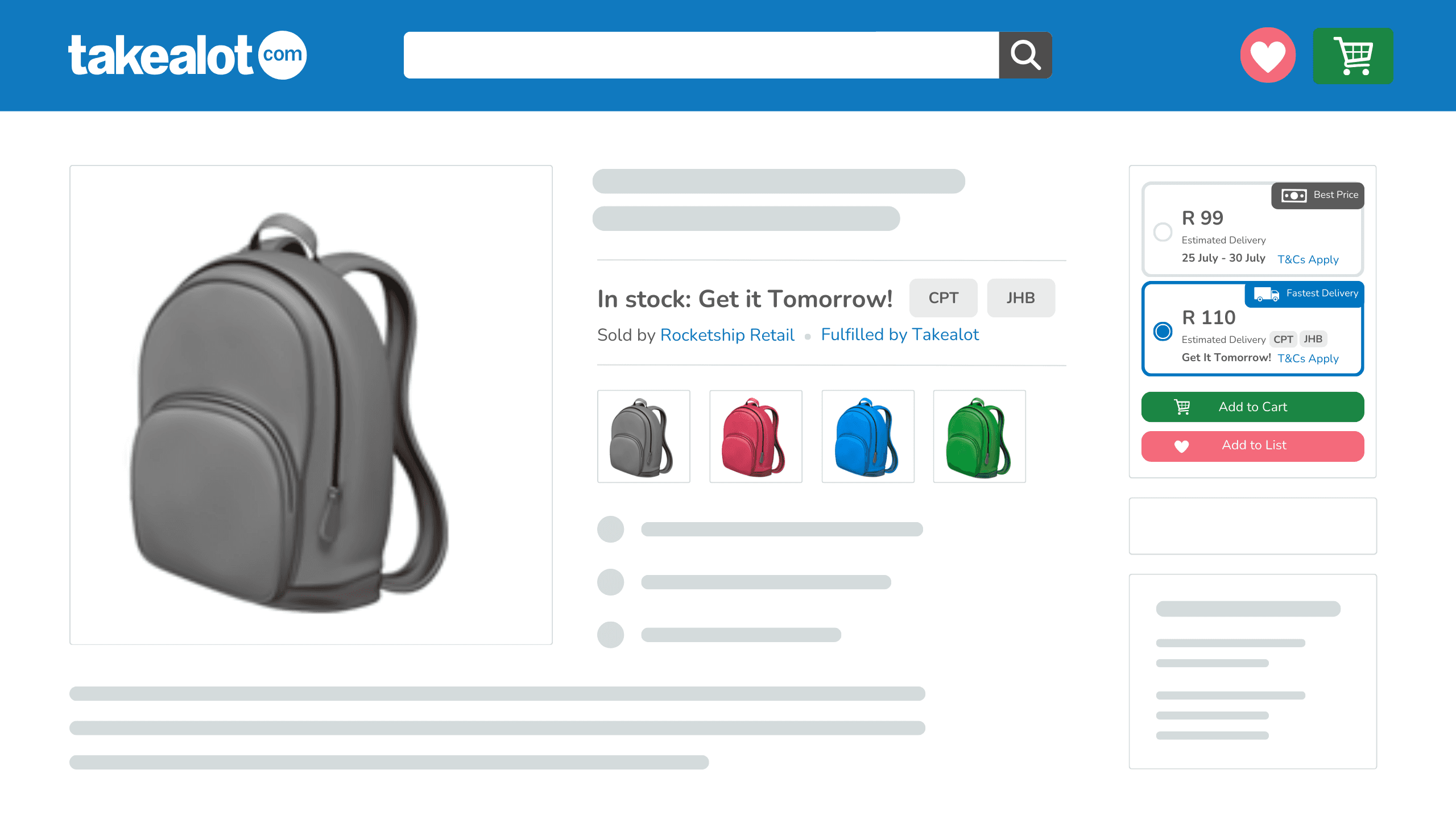
The Buybox (sometimes called the 'Buy Box') is the prominent 'Add to Cart' section on a Takealot product page. When multiple sellers offer the same product, Takealot's algorithm determines who wins this premium position. Winning the Buybox means your offer becomes the default choice when customers click 'Add to Cart'.
Why the Buybox Matters
- Dominates Sales Conversion: Controls over 90% of Takealot sales (Source: PalMetrics)
- Mobile Purchasing Power: Essential for mobile purchases (95%+ of mobile sales go through the Buybox)
- Visibility Factor: Direct impact on seller visibility and brand recognition
- Revenue Multiplier: Sellers winning the Buybox consistently report 3-5x higher sales volumes
- Customer Trust Indicator: Being in the Buybox positions you as Takealot's preferred seller
Takealot vs. Amazon Buybox: Key Differences
While Takealot's Buybox shares similarities with Amazon's Featured Offer (formerly known as the Buy Box), there are important distinctions South African sellers should understand:
Feature | Takealot Buybox | Amazon Featured Offer |
|---|---|---|
Algorithm Transparency | Less transparent | More documented factors |
Price Weight | Approximately 70% | Approximately 50% |
Fulfillment Impact | In-stock vs Lead Time crucial | FBA gives stronger advantage |
Rotation Frequency | Less frequent rotation | Rotates more frequently |
Performance Requirements | More lenient for new sellers | Stricter eligibility requirements |
Understanding Buybox Competition
Video Tutorial: Detailed Buybox Analysis
How Buybox Competition Works
When multiple sellers offer the same product on Takealot, they compete for the buybox position. Recent research from ShopDeploy and our own data analysis reveals:
- Product Listing Architecture
- Takealot maintains a single product listing per unique item
- Multiple sellers can offer products against this single listing
- Only one seller can occupy the Buybox at any given time
- Other offers appear below in the "Other Sellers" section
- Takealot's own offers (when available) receive a slight algorithmic advantage
- Buybox Algorithm Weighting (2025 Updated Analysis)
- Price: Primary determining factor (65-75% weight)
- Fulfillment Type: In-stock vs. Lead time (15-25% weight)
- Seller Performance: Rating, returns, cancellations (5-15% weight)
- Account Age & History: Minor but measurable impact (1-5% weight)
Buybox Winning Scenarios - Detailed Analysis
Our 2025 analysis of over 50,000 Takealot listings reveals these critical scenarios:
Scenario 1: All Sellers In-Stock
- Lowest price wins in 96.4% of cases
- Even a R1 difference is sufficient in most categories
- Exception: High-value electronics where R50-100 price differences may be tolerated if seller metrics are exceptional
- Delivery speed becomes tiebreaker in identical pricing situations
Scenario 2: All Sellers on Lead Time
- Lowest price wins in 94.7% of cases
- Shortest lead time is a significant secondary factor
- Seller rating becomes more influential than with in-stock scenarios
- Cancellation rates more heavily scrutinized by algorithm
Scenario 3: Mixed Fulfillment (In-Stock vs. Lead Time)
- In-stock products can command a premium of 12-18% on average
- Category-specific variations:
- Electronics: In-stock premium of 10-15%
- Home & Kitchen: In-stock premium of 15-20%
- Beauty & Personal Care: In-stock premium of 18-22%
- Toys & Games: In-stock premium of 20-25% during holiday season
- Lead time optimization thresholds:
- 1-3 days: Can compete with most in-stock items at 10-15% discount
- 4-7 days: Requires 15-20% discount to compete with in-stock
- 8+ days: Requires 25%+ discount to have realistic chance
Monitoring Your Buybox Status: Advanced Techniques
Unlike Amazon's detailed Buybox metrics, Takealot provides limited visibility. Our recommended monitoring approach:
- Automated Tracking Tools
- Revenuealot's Buybox Tracker offers real-time monitoring across your entire catalog
- Set up alerts for Buybox losses with reason analysis
- Track win percentage over time to identify trends
- Competitor Analysis
- Monitor top 3-5 competitors for each of your key products
- Track their price changes, stock status, and rating evolution
- Build price elasticity profiles for different product categories
- Seasonal Adjustment Planning
- Buybox competition intensifies during peak seasons
- Create calendar-based strategies for high-competition periods
- Build historical pricing data to predict competitive shifts
Deep Dive: Key Buybox Eligibility Factors
1. Fulfillment Performance Metrics
Takealot's algorithm evaluates several critical fulfillment metrics that directly impact Buybox eligibility:
- Lead Time Accuracy: The percentage of orders delivered within your stated lead time window
- 95%+ accuracy: Strong positive impact
- 90-94% accuracy: Neutral impact
- Below 90%: Significant negative impact
- Stock Reliability: How consistently you maintain inventory for your listed products
- Frequent stockouts severely penalize Buybox eligibility
- Products with stockout history face a 48-72 hour "probation period" when restocked
- Strategic inventory management is crucial (see our inventory management guide)
- Cancellation Rate Thresholds: Order cancellations directly impact Buybox eligibility
- Below 1%: Excellent (positive algorithm factor)
- 1-3%: Acceptable
- 3-5%: Concerning (negative impact)
- Above 5%: Severe penalty, significantly reduces Buybox chances
2. Comprehensive Pricing Strategies
Price remains the dominant factor in Takealot's Buybox algorithm. Our research has identified these critical pricing elements:
- Total Landed Price: The complete cost to the customer including:
- Base product price
- Shipping costs (when applicable)
- Any seller-specific fees
- Price Stability: Rapid or frequent price changes can trigger algorithm penalties
- Strategic price changes (1-3 times daily) are optimal
- Automated "price wars" can trigger algorithmic cooling periods
- Price history impacts Buybox eligibility for up to 14 days
- Competitive Price Positioning:
- Position within the competitive set matters more than absolute price
- First position (lowest price): Strong advantage
- Second position: Can still win with better metrics
- Third position or lower: Requires significant advantages in other factors
3. Seller Performance Excellence
Takealot evaluates these critical seller metrics that influence Buybox eligibility:
- Customer Feedback: Your overall seller rating affects Buybox chances
- 4.7-5.0 stars: Excellent position
- 4.3-4.6 stars: Good position
- 4.0-4.2 stars: Acceptable but disadvantaged
- Below 4.0: Significant disadvantage
- Return Rate Analysis: Return rates impact Buybox eligibility
- Category-specific thresholds apply
- Clothing/Fashion: Below 10% considered good
- Electronics: Below 5% considered good
- Home goods: Below 3% considered good
- Customer Inquiry Response Time:
- Under 4 hours: Excellent
- 4-12 hours: Good
- 12-24 hours: Acceptable
- Over 24 hours: Poor (negatively impacts Buybox chances)
Advanced Buybox Winning Strategies for 2025
1. Precision Pricing Optimization
Research from ShopGlu and our internal data shows these pricing strategies yield highest Buybox win rates:
- Dynamic Pricing Windows: Adjust pricing during these key periods
- Morning pricing (7-9 AM): Set competitive baseline
- Workday pricing (10 AM-4 PM): Maintain stable position
- Evening pricing (7-10 PM): Optimize for peak purchase hours
- Late night (11 PM-6 AM): Opportunity for higher margins
- Margin-Based Price Rules: Establish clear rules based on product categories
- High-volume, low-margin (e.g., groceries): 5-10% margin floor
- Medium-volume, medium-margin (e.g., electronics): 12-18% margin floor
- Low-volume, high-margin (e.g., luxury items): 25%+ margin floor
- Competitor-Specific Strategies: Adjust approach based on competitor behavior
- Against aggressive repricers: Set strict minimum margins
- Against manual repricers: Schedule more frequent adjustments
- Against Takealot Direct: Identify and focus on their restocking patterns
2. Smart Inventory Management for Buybox Advantage
Fulfillment type significantly impacts Buybox success. Optimize with these strategies:
- Strategic In-Stock Positioning: For your top 20% of products:
- Maintain continuous in-stock status
- Implement safety stock levels of 150% of average weekly sales
- Set automatic reorder points
- Use our guide to in-stock items on Takealot
- Lead Time Optimization: For the remaining 80% of your catalog:
- Optimize lead times to the shortest possible window
- Segment by fulfillment speed (1-2 days, 3-5 days, 6+ days)
- Price according to lead time segment
- Learn more about lead time orders on Takealot
- Distribution Center Strategy: Takealot has multiple DCs - place inventory strategically
- Johannesburg DC: Critical for Gauteng customers
- Cape Town DC: Essential for Western Cape
- Analyze your customer distribution and allocate accordingly
3. Leveraging Advanced Technology
The competitive nature of the Buybox makes manual management nearly impossible. Modern Takealot sellers are leveraging these technologies:
Revenuealot - The Market Leading Solution
Revenuealot provides the most comprehensive Buybox management solution for Takealot sellers:
- Intelligent Pricing Algorithm: Automatically adjusts prices based on:
- Competitor pricing changes
- Time of day optimization
- Day of week patterns
- Seasonal demand fluctuations
- Margin protection guardrails
- Competitor Intelligence Suite:
- Real-time monitoring of competitor prices
- Stock level tracking across all competing offers
- Fulfillment type analysis
- Historical pricing pattern recognition
- Dashboard & Analytics:
- Buybox win rate tracking by product, category, and overall
- Profit optimization recommendations
- Performance trend analysis
- Competitive positioning maps
- Automated Rule Engine:
- Create custom rules for different products and categories
- Set time-based pricing strategies
- Implement competitor-specific tactics
- Schedule temporary promotions
Other Tools in the Ecosystem
While Revenuealot offers the most comprehensive solution, these other tools provide specific functionality:
- ShopDeploy: Mobile app for Takealot seller management
- Stockburst: Basic automated pricing tools
- PalMetrics: Buybox analytics platform
4. Category-Specific Buybox Strategies
Different product categories on Takealot have unique Buybox dynamics:
Electronics & Computing
- Highly price-sensitive (even R5-10 differences matter)
- In-stock status critical due to high demand
- Performance metrics heavily weighted
- Recommended approach: Aggressive pricing with strict in-stock requirements
Home & Kitchen
- Moderate price sensitivity
- Brand loyalty more influential
- Shipping speed expectations higher
- Recommended approach: Balance between price and service quality
Fashion & Apparel
- Less price sensitive than electronics
- Size/variant availability crucial
- Return policy heavily influences conversion
- Recommended approach: Focus on inventory depth and service quality
Health & Beauty
- Brand authenticity concerns dominate
- Seller rating heavily weighted
- Expiration dates critical factor
- Recommended approach: Emphasize credentials and authentic supply chain
Measuring Your Buybox Success
Implementing a comprehensive measurement framework is essential for long-term Buybox success. Our recommended KPIs include:
- Buybox Win Rate: Percentage of time you win the Buybox for each product
- Track daily, weekly, and monthly
- Set category-specific targets (e.g., 80% for top products)
- Compare against competitor win rates when possible
- Price Position Index: Where your price sits relative to competition
- 1.0 = lowest price in market
- <1.1 = strong competitive position
1.2 = weak competitive position
- Revenue Attribution: Percentage of sales from Buybox vs. Other Sellers section
- Buybox typically accounts for 85-95% of sales
- Other Sellers section typically accounts for 5-15% of sales
- Track changes in this ratio to identify opportunities
- Profit Margin by Buybox Status: Compare profitability of Buybox sales vs. non-Buybox
- Higher volume but potentially lower margins in Buybox
- Lower volume but potentially higher margins outside Buybox
- Find your optimal balance point
Common Buybox Myths Debunked
Myth 1: Undercutting by R1 Always Works
While price is crucial, Takealot's algorithm has matured. Rapid R1 undercuts can trigger algorithmic cooling periods where your price changes are temporarily discounted.
Myth 2: The Buybox is Random When Prices Match
When prices match, Takealot follows a weighted rotation that heavily favors sellers with better metrics. It's not random but predictably weighted toward better performers.
Myth 3: New Sellers Can't Win Against Established Ones
Our analysis shows new sellers can win the Buybox within their first week by offering competitive prices and maintaining perfect order metrics. Account age is a minor factor.
Myth 4: Takealot Always Gives Itself the Buybox
While Takealot Retail receives a slight algorithmic advantage, third-party sellers consistently win the Buybox against Takealot when offering better value. The advantage is estimated at only 3-5% in most categories.
Case Studies: Buybox Success Stories
Electronics Retailer: 237% Sales Increase
A consumer electronics seller implemented Revenuealot's automated pricing system and saw their Buybox win rate increase from 23% to 78% within 30 days, resulting in a 237% sales increase with only a 4.5% reduction in average selling price.
Home Goods Importer: Doubled Profit Margins
By using Revenuealot's competitor stock tracking, a home goods seller identified opportunities to increase prices when competitors were out of stock, doubling their profit margins while maintaining a 65% Buybox win rate.
Fashion Startup: 300% Growth in First Year
A new fashion seller using Revenuealot from day one achieved a consistent 80%+ Buybox win rate, resulting in 300% year-over-year growth and expansion from 50 to 500 SKUs in their first year.
Conclusion: Your Buybox Mastery Plan
Winning the Takealot Buybox requires a sophisticated, data-driven approach combining competitive pricing, excellent operational metrics, and strategic inventory management. The most successful sellers leverage advanced tools like Revenuealot to automate and optimize their Buybox strategy.
Ready to transform your Takealot business? Follow this action plan:
- Audit Your Current Performance: Analyze your current Buybox win rate and identify gaps
- Implement Intelligent Pricing: Set up automated price management with Revenuealot
- Optimize Your Fulfillment: Strategically balance in-stock and lead time offerings
- Monitor & Adapt: Continuously track performance and adjust your strategy
For personalized assistance with your Buybox strategy, book a consultation with our Takealot experts or explore our related articles on Takealot selling strategies.
Related Articles: